
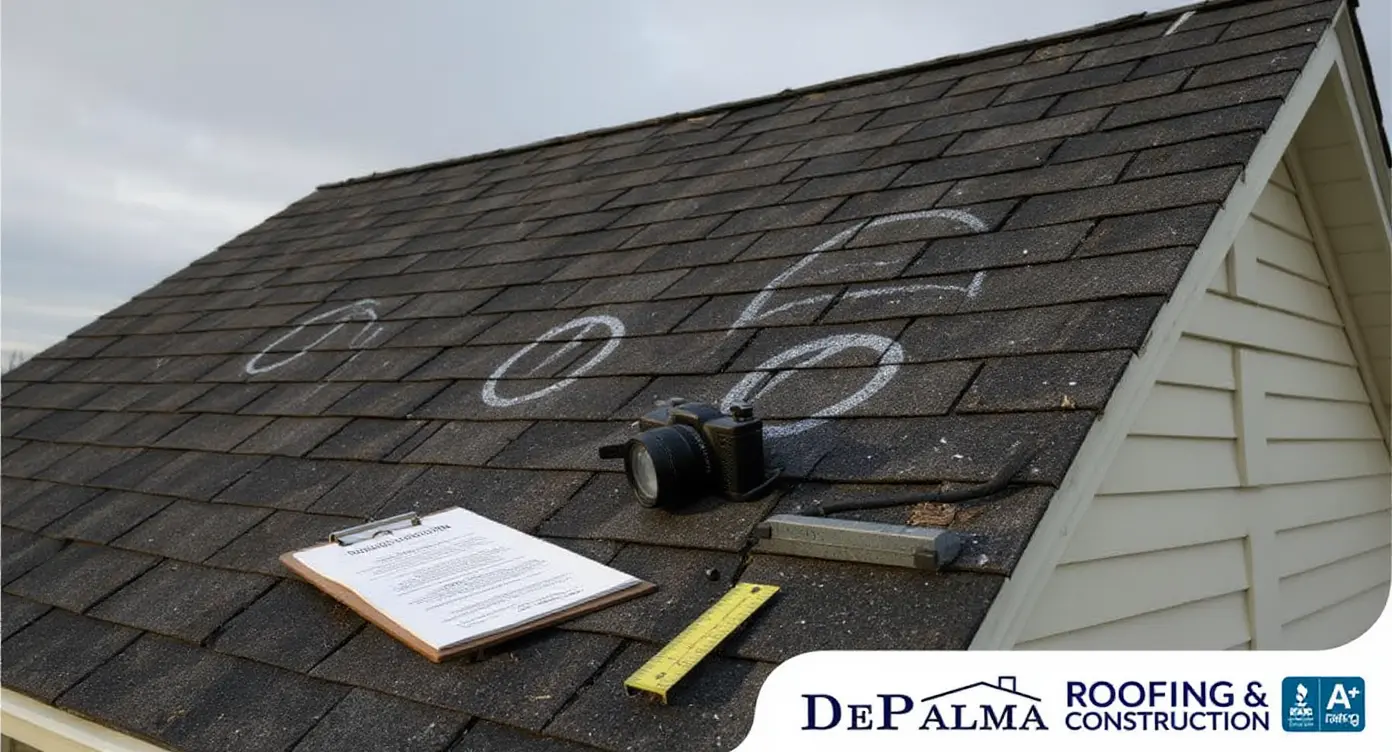
Roof Insurance Claim Assistance in Kansas
Filing a roof damage claim is confusing — ACV vs. RCV, depreciation holdbacks, Xactimate scope sheets, and adjuster deadlines. We handle the documentation and coordination so your claim reflects the full damage.
Why Do So Many Kansas Homeowners Get Underpaid on Roof Insurance Claims?
Most homeowners don't know the difference between ACV and RCV — and their insurer doesn't explain it. An ACV (Actual Cash Value) policy pays the depreciated value of your roof. A 15-year-old roof on an ACV policy might only pay 40-50% of the replacement cost. An RCV (Replacement Cost Value) policy pays full replacement minus your deductible — but the insurer initially withholds depreciation until you prove the work is complete. If you don't know which policy you carry, you can't evaluate whether your claim check is fair.
Insurance adjusters spend 20-30 minutes on your roof and regularly miss damage. Adjusters handle 8-12 inspections per day during storm season. They're working fast, and they may not check every slope, every valley, or behind every chimney. If damage on a back slope or inside a valley isn't called to their attention, it doesn't go in the scope. A scope that's missing three squares of shingles and two sections of flashing can be underpaid by $2,000-$4,000.
Code upgrade costs are often excluded from initial claim scopes. When your original roof was installed 20 years ago, drip edge wasn't required by Kansas building code. Ice and water shield requirements have changed. Your insurer may not include these code-mandated upgrades in the initial scope, even though they're legally required for a new installation. These missing line items can represent $1,000-$2,500 in unclaimed coverage.
Many homeowners don't know they can request an adjuster re-inspection. If your initial claim seems low, you have the right to request a second inspection — with your contractor present to point out documented damage. Kansas insurance regulations protect this right. Yet many homeowners accept the first number without questioning it, leaving thousands of dollars in legitimate coverage on the table.
Depreciation recovery goes unclaimed on thousands of Kansas claims every year. On RCV policies, your insurer withholds depreciation from the initial payment. After the roof is replaced, you submit the final invoice and completion photos to recover that withheld amount. Kansas law requires payment within 30 days of receiving proof. But many homeowners never file for depreciation recovery because they don't realize they're owed additional money — or they don't know how to file.
Filing deadlines create urgency you may not realize exists. The Kansas claim filing deadline varies by policy — some require reporting within 90 days, others allow up to one year. Missing the deadline can result in a denied claim, regardless of how severe the damage is. Checking your declarations page for the reporting window is one of the first steps after discovering storm damage.
How Does ACV vs RCV Policy Interpretation Affect Your Roof Claim Payout?
ACV vs. RCV: Which Policy Type Determines How Much You Receive
ACV — Actual Cash Value
ACV policies pay what your roof is worth today — not what it costs to replace. Your insurer calculates the current depreciated value based on age, original lifespan, and condition. A 15-year-old architectural shingle roof with a 30-year rated lifespan has 50% depreciation applied.
ACV Example
- Replacement cost$12,000
- Depreciation (50%)- $6,000
- Deductible- $1,000
- ACV Payout$5,000
You pay the remaining $7,000 out of pocket to get a new roof.
RCV — Replacement Cost Value
RCV policies pay the full cost to replace your roof with equivalent materials. Your insurer initially withholds depreciation (just like ACV), but you recover that amount after the work is complete by submitting the final invoice. Your out-of-pocket cost is your deductible only.
RCV Example
- Replacement cost$12,000
- Initial payment (ACV)$5,000
- Depreciation recovery+ $6,000
- Total RCV Payout$11,000
Your out-of-pocket cost is your $1,000 deductible.
Kansas ACV policies are increasingly common on roofs over 15 years old. Some insurers automatically switch from RCV to ACV coverage when your roof reaches a certain age — and they may not notify you clearly. Others offer reduced premiums for ACV-only coverage. Check your declarations page under "Coverage A — Dwelling" to verify whether your roof coverage is stated as "replacement cost" or "actual cash value."
We help you understand your policy before filing the claim. Knowing whether you carry ACV or RCV changes the financial calculus of filing. On an ACV policy with heavy depreciation, the claim payout may not cover enough of the replacement cost to make filing worthwhile — especially if it adds a claim to your record. We walk you through the numbers so you make an informed decision.
How Does the Insurance Claim Process Work From Filing to Restoration?
We guide you through every step — documentation, filing, adjuster meeting, approval, and depreciation recovery.
Document the Damage
We inspect your roof and prepare a complete damage package — photos, measurements, and a scope sheet in Xactimate format. This is the foundation your claim is built on.
File Your Claim
You call your insurance company to file the claim. We provide guidance on what to say, what to expect, and the documentation your agent will request.
Adjuster Inspection
We meet your adjuster at your property, walk the roof together, and ensure every damage point is captured in their scope. This is where most underpaid claims get corrected.
Approval & Restoration
Once your claim is approved, we schedule the restoration. If your policy is RCV, we help you file for depreciation recovery after the work is complete.
When Should You File a Supplemental Claim for Additional Roof Damage?
How Does Supplemental Claim Filing Recover Depreciation Holdbacks?
Supplemental claim filing corrects underpaid scopes after the initial approval. The most common scenario: your adjuster's scope includes shingle replacement but misses flashing, drip edge, ice and water shield, or code upgrades that are required for a proper installation. These items can represent $1,500-$4,000 in additional coverage that your policy covers but the initial scope didn't include.
Decking damage discovered during tear-off is the most frequent supplement trigger. Until the old shingles come off, no one knows the true condition of your roof decking. If we find rotted, delaminated, or water-damaged OSB during a complete tear-off and reroof, we photograph it in place, document the square footage, and file a supplement with your insurer. Kansas policies cover hidden damage discovered during covered repairs.
Code upgrade supplements cover items your original roof didn't have. If your roof was installed before current Kansas building code required drip edge, ice and water shield in valleys and eaves, or specific ventilation standards, your insurer is typically required to cover these code-mandated upgrades as part of a storm damage claim. We reference the specific code sections in supplement documentation.
Interior damage from leaks may not appear until weeks after the storm. Water that entered through storm-damaged shingles can travel along rafters and decking before appearing as a ceiling stain or wall discoloration inside your home. If interior damage surfaces after your initial claim is approved, a supplemental filing adds drywall repair, painting, and potentially insulation replacement to your covered scope.
What Is an Xactimate Scope Sheet and Why Does Line-Item Accuracy Matter?
We format every supplement with Xactimate line item codes and supporting photographs. Supplements filed in the same format your adjuster uses get processed faster and with fewer questions. We reference the specific line items that were missing or undervalued, attach photos showing the damage or code requirement, and submit through your adjuster's preferred channel.
What Kansas-Specific Insurance Rules Affect Your Roof Claim?
Filing Deadline Requirements
Kansas policies set their own reporting windows — typically 90 days to 1 year. There is no single statewide deadline. Your specific window is in your policy's "conditions" section under "duties after a loss." Missing this deadline can result in a denied claim. We recommend filing within 60 days to avoid ambiguity about which storm caused the damage.
Depreciation Recovery Timelines
Kansas law requires insurers to pay recoverable depreciation within 30 days of receiving proof of completed repairs. You submit the contractor's final invoice, completion photos, and a depreciation recovery request. If your insurer doesn't pay within the 30-day window, you have grounds for a complaint with the Kansas Insurance Department.
Appraisal Clause Rights
If you and your insurer disagree on the damage amount, most Kansas policies include an appraisal clause. Both sides hire independent appraisers, and if they can't agree, an umpire makes the final determination. This process typically costs $300-$500 for your share but can recover thousands in underpaid claims. We can recommend experienced roofing appraisers in the Lawrence area.
Deductible Fraud Laws
Any Kansas contractor who offers to "cover" or "waive" your deductible is committing insurance fraud. Kansas law prohibits contractors from absorbing deductibles or inflating claims to offset your out-of-pocket cost. If a storm chaser offers this, walk away — they're putting your insurance policy at risk and breaking state law.
Insurance Claim Assistance Across Douglas County
Based in Lawrence at 2500 W 31st St, we serve homeowners and businesses across Douglas County and surrounding communities.
Communities We Serve
Drive Times from Lawrence Office
- Eudora15 min
- Baldwin City20 min
- Lecompton15 min
- Kanwaka10 min
- Midland12 min
- Pleasant Grove18 min
- Sibleyville20 min
Kansas Roof Insurance Claim Questions Homeowners Ask
- What is the difference between ACV and RCV roof insurance policies in Kansas?
- ACV (Actual Cash Value) policies pay the depreciated value of your roof at the time of damage. If your 15-year-old roof needs replacement, an ACV policy deducts 15 years of depreciation from the payout — often leaving you with 40-50% of the replacement cost. RCV (Replacement Cost Value) policies pay the full cost to replace your roof with equivalent materials, minus your deductible. Most Kansas homeowners have RCV policies, but ACV policies are becoming more common on roofs over 15 years old. Check your declarations page or call your agent to confirm which type you carry.
- How does depreciation recovery work on a Kansas roof claim?
- On an RCV policy, your insurer initially pays ACV (replacement cost minus depreciation minus deductible). After the roof is replaced, you submit the contractor's invoice and completion photos to recover the withheld depreciation. Kansas law requires insurers to pay recoverable depreciation within 30 days of receiving proof of completed repairs. This is money you're owed — it is not optional for your insurer. We provide the documentation you need for the depreciation recovery filing.
- What is a supplemental claim and when should I file one?
- A supplemental claim filing is a request for additional payment after your initial claim is approved but the scope was incomplete. Common reasons: the adjuster missed damage on a back slope, code upgrade requirements (drip edge, ice and water shield) weren't included, decking damage was discovered during tear-off, or interior damage from leaks wasn't in the original scope. We file supplements with specific Xactimate line item codes and supporting photos — the same format your adjuster uses.
- What is the Kansas claim filing deadline for storm damage?
- Most Kansas homeowners policies require you to report damage within one year of the storm event. However, some policies have shorter reporting windows — 90 days or 180 days. The Kansas claim filing deadline in your policy is on your declarations page under "conditions" or "duties after a loss." We recommend filing within 60 days of the storm. Waiting longer creates ambiguity about which storm caused the damage, and your insurer may argue that delayed reporting allowed the damage to worsen.
- Can I request an adjuster re-inspection if I disagree with the first assessment?
- An adjuster re-inspection request is your right under Kansas law. If the initial adjuster missed damage or their scope seems low, you can request a second inspection. We recommend having your contractor present for the re-inspection with marked damage points and documentation. If the re-inspection still doesn't resolve the dispute, Kansas homeowners can invoke the appraisal clause in their policy — both sides hire independent appraisers who determine the damage value.
- Do you charge for insurance claim assistance?
- There is no separate charge for our insurance claim assistance when we perform the restoration work. Our inspection, documentation, adjuster meeting coordination, and supplement filing are included in the scope of a storm damage restoration project. We are not a public adjuster — we are a roofing contractor who provides thorough documentation and works alongside your insurance company to ensure your claim reflects the actual damage.
- What does scope sheet documentation include?
- Our scope sheet documentation includes every line item needed for your claim: shingle type and square count, underlayment, ice and water shield, drip edge, starter strip, ridge cap, pipe boots, step flashing, valley metal, chimney flashing, tear-off and disposal, and any code upgrades required by current Kansas building standards. Each item references the Xactimate line item code your adjuster uses, with supporting photos showing the specific damage that necessitates each line item.