Roof Coating Services in Lawrence, KS
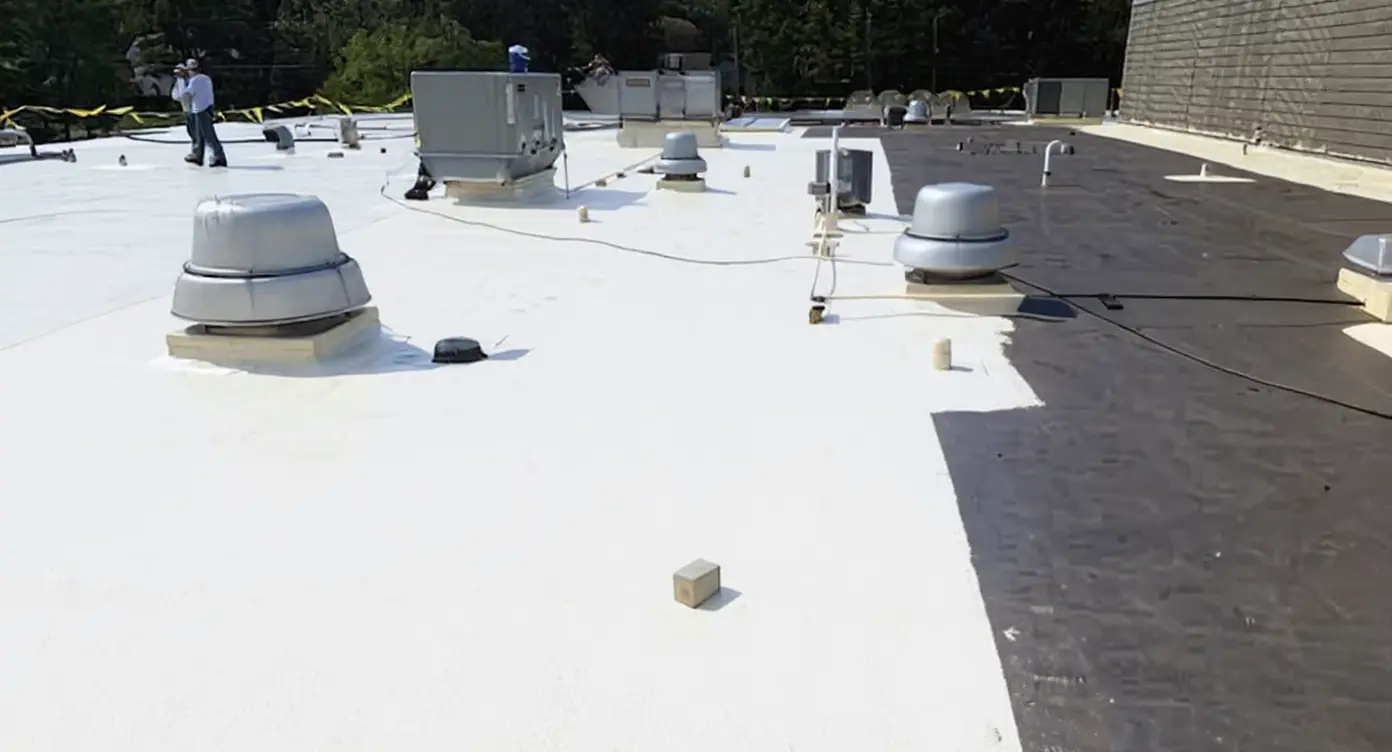
Your roof doesn't always need replacing — sometimes it needs renewing. Silicone and acrylic elastomeric coatings extend an existing roof's life by 10-15 years at 20-30% of replacement cost. We assess, recommend, and apply the right coating for your building.
When Does Coating Make More Sense Than Full Roof Replacement?
Many commercial roofs are replaced too early. A flat roof with an aging membrane but sound insulation and structure doesn't need a $60,000 tear-off and re-installation. A $15,000-$25,000 coating system restores the waterproof surface and adds 10-15 years of life. The underlying insulation, drainage, and structure remain intact — saving you the cost of demolishing and rebuilding what isn't broken.
Kansas UV radiation degrades roof surfaces faster than the underlying system. Lawrence receives over 200 sunny days per year. The UV-reflective surface of a roof membrane or metal panel breaks down years before the structural system beneath it. A coating replaces that UV barrier — essentially resurfacing the outermost layer without disturbing the system underneath.
Coating is the right solution when the structure is sound but the surface isn't. The key question is whether the roof's problems are surface-level (UV degradation, minor cracking, granule loss, surface rust on metal) or structural (saturated insulation, rotted decking, widespread membrane failure, major ponding with no drainage solution). If the structure is compromised, coating won't fix it. If the structure is sound, coating saves 70% vs. replacement. Our coating vs. replacement decision guide walks through the full evaluation criteria.
Metal roofs in Lawrence show surface rust decades before they need replacing. Standing seam and exposed-fastener metal roofs develop surface oxidation after 15-20 years, especially on south-facing slopes. The rust looks alarming but rarely penetrates the full metal thickness. A UV reflective coating seals the surface, stops rust progression, and extends the roof's functional life by a decade or more — for a fraction of what re-roofing with new metal panels would cost.
Solar Reflectivity Rating: How Initial vs. Aged SRI Affects Energy Savings
Energy savings offset coating costs within 3-5 years for many Lawrence businesses. White and light-colored roof coatings reflect 80-90% of solar radiation — compared to 5-25% for dark membranes and aged metal. On a 10,000 sq ft commercial building in Lawrence running AC from May through September, the cooling cost reduction is measurable. Building owners typically see 10-25% reduction in summer cooling costs after coating application.
Coatings generate zero tear-off waste. A full roof replacement sends thousands of pounds of old membrane, insulation, and fasteners to the landfill. Coating is applied directly over the existing surface after cleaning and preparation. For property owners and businesses with sustainability goals, this zero-waste approach is a significant advantage.
How Do Silicone and Acrylic Elastomeric Coatings Compare?
Silicone Roof Coating
Silicone is the premier choice for flat roofs with ponding water challenges. Unlike acrylics, silicone doesn't break down when submerged in standing water — it maintains full waterproofing performance even in areas where water pools for days after heavy Kansas storms.
Silicone maintains flexibility across extreme temperature ranges. Kansas temperatures swing from -10°F in January to 105°F in August. Silicone doesn't crack in cold or soften excessively in heat. It remains elastic enough to expand and contract with your roof substrate without separating.
- + Ponding water resistance
- + 10-15 year lifespan
- + UV reflective (white)
- + Single-coat application possible
- - Attracts dirt (requires periodic cleaning)
- - Higher material cost than acrylic
Acrylic Elastomeric Coating
Acrylic coatings are ideal for sloped roofs — both metal and asphalt — where ponding isn't a concern. The water-based formula makes application cleaner and faster, and it's available in multiple colors to match building aesthetics. Acrylic is the coating of choice for metal roof restoration in Douglas County.
Acrylics provide excellent UV reflectivity and color retention. The coating reflects solar heat while maintaining a clean appearance longer than silicone. For buildings visible from the street — offices, retail, and restaurants along Massachusetts Street or 23rd Street — aesthetics matter.
- + Lower material cost
- + Available in colors
- + Better dirt resistance (self-cleaning in rain)
- + Excellent UV reflectivity
- - Cannot withstand ponding water
- - Requires dry weather for application
How Does the Roof Coating Process Work?
Assessment, selection, preparation, application. Most coating projects are completed in 2-4 days.
Roof Assessment
We inspect your existing roof to determine if it's a candidate for coating — checking membrane condition, seam integrity, insulation saturation, and structural soundness.
Coating System Selection
Based on your roof type, ponding conditions, and budget, we recommend silicone or acrylic elastomeric coating at the appropriate mil thickness for your application.
Surface Prep & Application
We clean the roof surface, repair seams and penetrations, apply primer if needed, then spray or roll the coating to specified mil thickness with adhesion testing at each stage.
Inspection & Warranty
We verify uniform mil thickness application across the entire surface, check all detail areas, and provide manufacturer warranty documentation plus a maintenance schedule.
What Does Proper Mil Thickness Application Look Like?
Mil Thickness Specification: Why 20–30 DFT Is the Professional Standard
Mil thickness is the difference between a 5-year coating and a 15-year coating. A "mil" is one thousandth of an inch. Standard commercial silicone coatings are applied at 20-30 mils wet, curing to 15-20 mils dry. Acrylic coatings are applied at 15-25 mils wet per coat, typically in two coats. Every additional mil of dry thickness adds approximately one year to the coating's effective life.
We measure mil thickness during application, not after. Wet film thickness gauges are inserted into the coating immediately after application to verify coverage. If a section reads thin — common around penetrations, curbs, and edges — we add material before moving on. Checking after the coating has cured is too late to correct thin spots without applying a separate patch coat.
Substrate Preparation and Pressure Washing: The Step That Determines Adhesion
Surface preparation determines whether the coating bonds or peels. Our adhesion testing protocol starts before any coating goes on. We clean the roof surface (pressure wash, chemical cleaning, or both), repair any open seams or penetration leaks, apply primer where the substrate requires it, and test adhesion with a sample patch. If the test patch doesn't bond, we don't proceed until the surface prep is corrected.
Detail areas get extra attention and extra material. Curb flashings around HVAC units, pipe penetrations, drain collars, and parapet wall terminations all receive reinforcing fabric embedded in additional coating. These detail areas experience the most thermal movement and water exposure — they fail first when skipped or under-coated. We build up these details to 40-60 mils for maximum durability.
What Does a Roof Coating Cost in Lawrence, KS?
Roof coatings run 20-30% of full replacement cost — the savings are significant. A commercial flat roof that would cost $60,000-$80,000 to tear off and replace can be coated for $15,000-$30,000 with a 10-15 year warranty. The savings increase with larger roofs because coating scales more efficiently than full replacement.
Residential metal roof coatings are especially cost-effective. Replacing a metal roof on a Lawrence home costs $15,000-$30,000. Coating that same metal roof costs $2,000-$5,000 and adds 10+ years of life. For homeowners whose metal roof is showing surface rust but remains structurally sound, coating is the clear choice.
The true cost includes energy savings. A UV reflective coating on a 10,000 sq ft commercial building reduces summer cooling costs by 10-25%. Over a 10-year coating life, that energy savings can offset 30-50% of the initial coating cost.
Lawrence Roof Coating Cost Ranges
Coating prices include surface preparation, primer (if needed), reinforcing fabric at details, and full mil-thickness application.
Save 70% vs. Replacement — Get a Free Coating Assessment
Roof Coating Services Across Douglas County
Based in Lawrence at 2500 W 31st St, we serve homeowners and businesses across Douglas County and surrounding communities.
Communities We Serve
Drive Times from Lawrence Office
- Eudora15 min
- Baldwin City20 min
- Lecompton15 min
- Kanwaka10 min
- Midland12 min
- Pleasant Grove18 min
- Sibleyville20 min
Roof Coating Questions Lawrence Property Owners Ask
- How much does a roof coating cost compared to full replacement in Lawrence?
- Roof coatings cost 20-30% of what a full roof replacement costs. For a 10,000 sq ft commercial roof in Lawrence, a quality silicone coating system runs $20,000-$35,000 compared to $50,000-$100,000 for a full membrane replacement. Residential metal roof coatings run $2,000-$5,000 depending on size. The cost savings make coatings the right choice when the existing roof structure is sound but the surface is deteriorating.
- What is the difference between silicone and acrylic elastomeric coatings?
- Silicone roof coating excels at ponding water resistance — it can sit in standing water indefinitely without breaking down. This makes it ideal for flat commercial roofs in Lawrence with drainage challenges. Acrylic elastomeric coating is better for sloped roofs where ponding isn't a concern. Acrylics are more UV reflective, slightly less expensive, and available in colors. However, acrylics cannot withstand ponding water and will fail where water collects. We recommend the right coating based on your roof's slope and drainage patterns.
- How long does a roof coating last in Kansas?
- A properly applied silicone roof coating lasts 10-15 years in Kansas conditions. Acrylic elastomeric coatings last 8-12 years. Kansas UV exposure, hail, and freeze-thaw cycles are harder on coatings than moderate climates. The key variables are initial mil thickness application (thicker lasts longer), surface preparation quality, and annual maintenance. Many commercial building owners recoat every 10-12 years as an ongoing maintenance strategy — far less expensive and disruptive than periodic full replacement.
- Can you coat a roof that has ponding water issues?
- Silicone is the only coating that tolerates ponding water. If your flat roof has areas where water sits for 48+ hours after rain, silicone roof coating is the right choice — acrylics will fail in ponding zones. However, we also recommend addressing the drainage problem. Adding drains, clearing existing drains, or installing tapered insulation to create slope eliminates the ponding issue entirely. Coating over a ponding problem buys time; fixing the drainage solves it permanently.
- What does the adhesion testing protocol involve?
- Before applying any coating, we perform adhesion testing protocol checks on the existing roof surface. We apply a small test patch of coating and primer (if required) to a 12x12 inch area, let it cure for 24 hours, then attempt to peel it. If the coating bonds to the substrate and tears rather than peeling cleanly, adhesion is confirmed. If it peels, the surface needs additional cleaning, priming, or mechanical preparation. We test multiple locations because adhesion can vary across the roof due to different weathering and contamination levels.
- What is mil thickness and how does it affect coating performance?
- Mil thickness application refers to the wet and dry thickness of the coating measured in thousandths of an inch (mils). A standard commercial silicone coating is applied at 20-30 mils wet, which cures to approximately 15-20 mils dry. Thicker applications last longer and provide better UV and hail protection. We use mil thickness gauges during application to verify uniform coverage. Thin spots — where the applicator moved too fast or the surface was irregular — are the most common failure points. We check and correct these during application.