
The Roof Replacement Process — What Lawrence Homeowners Should Expect
A typical Lawrence roof replacement runs 1-3 days from tear-off to final cleanup, requires a Douglas County building permit ($75-$150), and follows seven distinct phases — initial call, on-site inspection, written estimate, contract and material order, tear-off and installation, code inspection, and final walk-through. Here's exactly what to expect at each stage.
What Happens When You First Call a Roofing Contractor?
The process starts with a phone call or form submission — not a sales pitch. When you contact us at (785) 699-7963, we ask a few basic questions: your address, what you're seeing (leaks, missing shingles, storm damage), and when you'd like someone to come look. We schedule a free inspection within 48 hours for most Lawrence addresses.
Before anyone climbs on your roof, you should know who you're dealing with. A legitimate Lawrence roofing contractor will provide their Kansas business license number, proof of general liability and workers' compensation insurance, and a physical office address. We operate from 2500 W 31st St in Lawrence — not a P.O. box, not a truck with out-of-state plates.
Be cautious of any contractor who shows up uninvited after a storm. Douglas County sees an influx of out-of-town crews after every significant hail event. They knock on doors in Old West Lawrence, North Lawrence, and Alvamar offering "free inspections" and pressing you to sign contracts on the spot. A local contractor doesn't need to chase storms — we're already here.
Expect the initial call to take 5-10 minutes. We don't give estimates over the phone because roof pricing depends on factors only visible during an on-site inspection — decking condition, pitch, number of layers, ventilation setup, and flashing condition. Anyone who quotes you a price without seeing the roof is guessing.
What Does a Pre-Replacement Roof Inspection Actually Include?
A thorough inspection covers six systems, not just the shingles. We check the roof covering (shingles, tiles, or membrane), the underlayment condition visible at edges, all flashing points (chimney, plumbing vents, wall intersections), soffit and fascia boards, gutter and downspout function, and attic ventilation from both inside and outside. Each system affects how long your new roof will last.
We measure your roof using a combination of on-roof measurement and satellite imaging. Total roof area measured in squares (1 square = 100 sq ft), pitch angle, number of ridges, valleys, hips, and penetrations all factor into the scope of work. A typical Lawrence home runs 18-25 squares. Homes with complex roof lines in neighborhoods like Barker or Shadow Ridge may reach 30-40 squares.
Attic inspection reveals problems invisible from the roof surface. We check for daylight penetrating through the decking, water stains on rafters and sheathing, adequate insulation depth, and ventilation airflow. In Lawrence homes built before 1970, we often find insufficient attic ventilation — a problem that accelerates shingle deterioration and creates ice dams during Kansas winters.
Every finding goes into a written report with photos. You receive a documented inspection report showing every issue, its severity, and our recommendation. If we determine repairs are sufficient and a full replacement isn't needed yet, we'll tell you — even though a replacement is a larger job for us. Honest assessments build the kind of reputation that keeps a local contractor in business for years.
How Does the Estimate and Material Selection Process Work?
Your written estimate breaks down every line item — materials, labor, permits, and disposal. We don't give single-number bids that hide what you're paying for. The estimate specifies the shingle brand and product line, underlayment type, ice and water shield coverage, flashing materials, ridge vent type, starter strip, drip edge, and the estimated number of decking sheets that may need replacement. You know exactly what you're getting before you sign anything.
Material selection is your biggest decision — and it directly affects lifespan and warranty. For most Lawrence homeowners, the choice comes down to three-tab shingles ($7,000-$10,000 installed, 25-year warranty), architectural shingles ($8,000-$15,000, 30-year to lifetime warranty), or metal roofing ($15,000-$30,000, 40-50 year lifespan). We walk you through sample boards, color options, and warranty differences during the estimate review.
Insurance-covered replacements have a different estimate process. If your roof replacement is covered by a Kansas insurance claim, we write the scope to match what your adjuster needs for approval. This includes Xactimate-format line items, photos tied to specific damage points, and code-upgrade documentation. We attend the adjuster meeting to ensure nothing gets missed or undervalued.
Get at least three written estimates — and compare apples to apples. When comparing roofing estimates, check that each one specifies the same shingle product (not just "architectural shingles"), the same underlayment type, ice and water shield coverage, and whether permits and final inspection are included. The cheapest bid often omits items that the more thorough estimates include.
What Permits Does Douglas County Require for Roof Replacement?
Lawrence and Douglas County require a building permit for any full roof replacement. The permit ensures the work meets Kansas Residential Code requirements for materials, installation methods, and structural integrity. Permit fees typically run $75-$150 depending on the project scope. We pull the permit, post it on-site during work, and schedule the final inspection — you don't have to visit any government office.
Permit processing in Lawrence takes 1-3 business days during normal periods. After a major storm event, the backlog can extend to 5-7 days as hundreds of roofing permits flood the system simultaneously. We submit permits as soon as you approve the estimate to minimize wait time. Any contractor who suggests skipping the permit is cutting a corner that can affect your insurance coverage and resale value.
Scheduling depends on season, weather, and material availability. Spring and summer are peak roofing season in Kansas — especially May through August when storm damage repairs surge. During peak season, expect 2-4 weeks between signing the contract and installation day. Off-season replacements (October through March) often schedule within 1-2 weeks and may cost slightly less due to lower demand.
Material ordering typically takes 3-5 business days for standard products. Common asphalt shingle colors and styles are stocked at local supply houses. Specialty colors, premium designer shingles, or metal roofing panels may require 2-3 weeks for delivery. We confirm material availability before setting your installation date.
What Happens on Installation Day — Hour by Hour?
Materials arrive the day before installation, typically between 7:00 AM and noon. A supply truck delivers shingle bundles, underlayment rolls, flashing, and accessories directly to your driveway or yard. For homes with accessible roofs, materials may be loaded directly onto the roof by a conveyor or boom truck. This pre-staging means the crew starts tear-off first thing the next morning without waiting on deliveries.
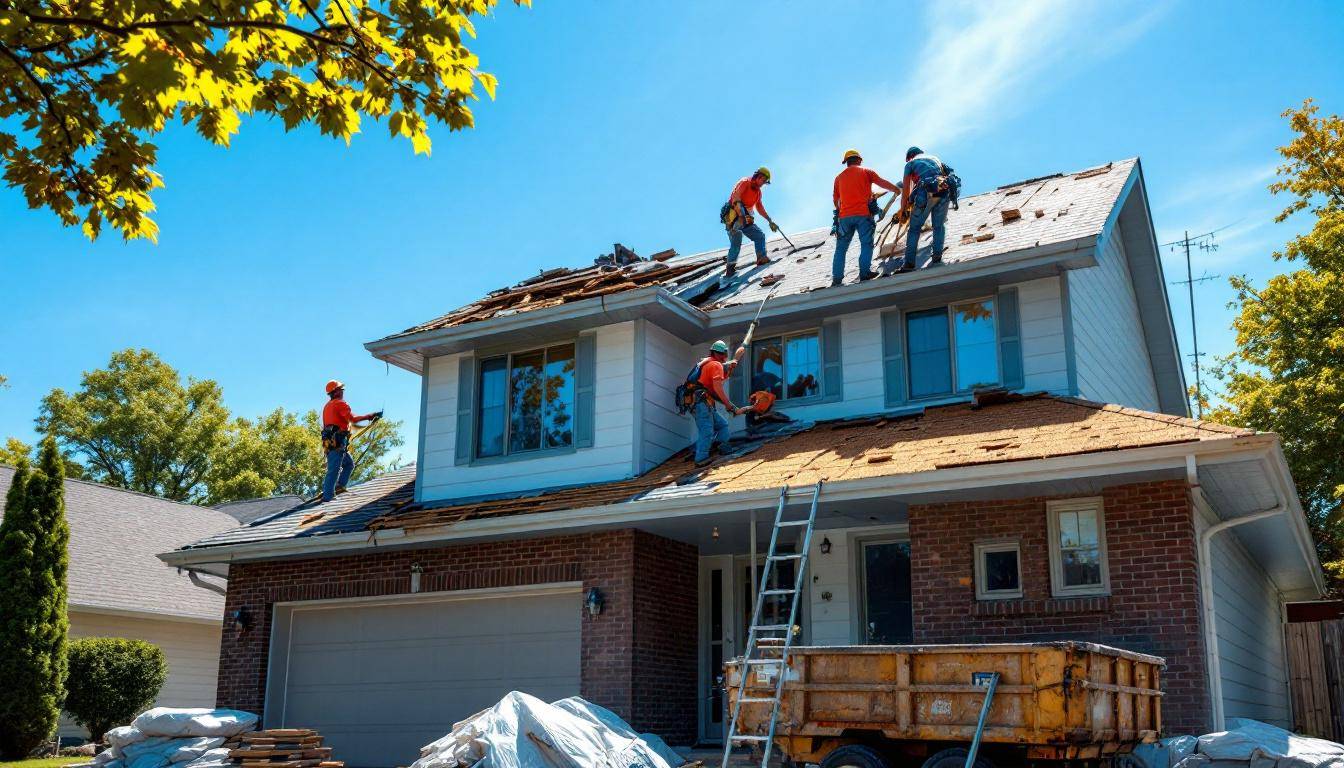
Tear-off starts at 7:30 AM and is typically complete by midday on a standard Lawrence home. The crew works in sections — stripping shingles, underlayment, and old flashing down to bare decking. Debris gets shoveled directly into a dumpster positioned below. This is the loudest phase of the job. If your roof has two layers of shingles (common in older Lawrence neighborhoods), tear-off takes 30-50% longer.
Decking inspection and repair happens immediately after tear-off. With the roof surface exposed, we walk every section checking for soft, water-damaged, or delaminated sheathing. Damaged sheets get cut out and replaced with new OSB or plywood. Most Lawrence homes need 0-3 sheet replacements. Homes with chronic leaks or poor ventilation may need more extensive decking work.
New roof installation follows a specific sequence that can't be shortcut. First: drip edge along the eaves. Second: ice and water shield on all eaves, valleys, and penetrations. Third: synthetic underlayment across the entire roof surface. Fourth: starter strip along eaves and rakes. Fifth: shingles installed from bottom to top with manufacturer-specified nail patterns. Sixth: ridge cap along all ridges and hips. Each layer depends on the one below being correctly installed.
Flashing installation is where good contractors separate from bad ones. Every pipe boot, chimney apron, wall step flashing, and valley lining requires precise measurement, cutting, and sealing. Improperly flashed penetrations are the number one source of roof leaks on new installations. We use lead pipe boots (not rubber), step flashing integrated with the shingle courses, and counter-flashing set into mortar joints on masonry chimneys.
A typical 20-25 square roof in Lawrence is fully installed and cleaned up by 5:00-6:00 PM. That's tear-off, decking repair, full system installation, ridge vent, and cleanup in a single working day. Larger or more complex roofs may extend into a second day, with all exposed sections tarped overnight.
What Does the Final Walk-Through and Cleanup Cover?
Cleanup starts before the last shingle goes on. Throughout installation day, debris gets loaded into the dumpster continuously — not left in a pile for later. After the roof is complete, we run a magnetic nail sweep across your entire yard, driveway, flower beds, and sidewalks. Roofing nails in your tires are an entirely preventable problem, and we treat cleanup as seriously as the installation itself.
The walk-through happens with you present, not just a quick phone call. We point out every element of the new installation — shingle alignment, flashing work, ridge vent, drip edge, and gutter reattachment points. If anything looks off to you, this is the time to flag it. We photograph the completed roof from all angles for your records and for warranty documentation.
Final inspection by the Douglas County building inspector happens within 3-5 business days. We schedule this inspection and are available to meet the inspector on-site if needed. The inspector checks nail patterns, flashing details, ventilation, and overall code compliance. Once passed, you receive a signed inspection card confirming the work meets Kansas building code — an important document for insurance and resale purposes.
Warranty registration paperwork is completed and mailed to you within one week. We register your new roof with the manufacturer, which activates both the material warranty and any extended system warranty. You receive copies of the manufacturer warranty, the workmanship warranty from us, the permit, and the passed inspection report. Keep these documents — you'll need them if you ever file an insurance claim or sell your home.
What Should You Expect in the Weeks After a New Roof Installation?
New asphalt shingles take 2-4 weeks to fully seal in warm weather. The adhesive strip on each shingle activates with sun exposure and heat. Until the shingles seal, they may appear slightly lifted at the edges — this is normal. In Kansas summers, sealing happens quickly. Winter installations may take longer, but the nailing pattern holds the shingles securely until the adhesive activates in spring.
Minor granule shedding in the first few rainstorms is normal. You may notice granules in your gutters for the first few weeks. Manufacturers apply excess granules during production, and the surplus washes off with initial rain. This is not a defect. If granule loss continues heavily after 6-8 weeks, contact us for a follow-up inspection.
Your energy bills may drop noticeably after replacement. A new roof with proper ventilation and ridge vent installation significantly reduces attic heat buildup. Lawrence homeowners commonly report 10-15% cooling cost reductions after replacing an older roof with modern reflective shingles and balanced ventilation.
Schedule an annual maintenance check starting one year after installation. A quick visual inspection — from the ground with binoculars or from a ladder at the eave — catches early issues before they become problems. Check for lifted shingles, debris accumulation in valleys, and clear gutters. We offer follow-up inspections at no charge for roofs we installed. Ready to begin? Schedule your free inspection with us today.
Roof Replacement Process Questions — Lawrence Homeowners
- How long does a complete roof replacement take in Lawrence?
- Most residential roof replacements in Lawrence take 1-3 days from tear-off to final cleanup. A standard 2,000 sq ft ranch home with a single layer of shingles typically completes in one day. More complex roofs with steep pitches, multiple valleys, or dormers may extend to 2-3 days. Weather delays are factored into scheduling — we monitor the 7-day forecast before starting any project.
- Do I need a permit for roof replacement in Douglas County?
- Yes. Douglas County and the City of Lawrence require a building permit for full roof replacements. We handle the permit application and scheduling of inspections as part of every project. The permit fee is typically $75-$150 depending on the scope. The final inspection confirms proper installation per Kansas building code — including nail patterns, ice and water shield placement, and ventilation requirements.
- Can I stay in my home during roof replacement?
- Yes, you can stay in your home during the entire process. Expect significant noise from tear-off (starting around 7:30 AM), vibrations you can feel inside, and temporary loss of satellite TV or internet if dishes or cables are roof-mounted. We recommend keeping pets indoors and moving vehicles away from the house to avoid falling debris. If you have infants or work from home with video calls, you may want to plan to be elsewhere during tear-off day.
- What happens if it rains during my roof replacement?
- We never start a tear-off without a clear weather window. If unexpected rain arrives mid-project, we tarp all exposed sections with 6-mil poly sheeting secured with furring strips — not just draped over. This waterproofing holds through heavy rain and wind. We resume work once the decking dries completely, which typically takes 4-8 hours of sunlight after rain stops. Your home stays protected throughout.
- How should I prepare my home before the roofing crew arrives?
- Move vehicles out of the driveway and away from the house perimeter. Remove wall decorations on upper floors — the vibration from tear-off can shake things loose. Clear items from your attic directly under the roof if accessible. Trim back tree branches within 6 feet of the roof line if possible. Let your neighbors know about the work — we place dumpsters and materials in the driveway, and there will be construction noise throughout the day.