
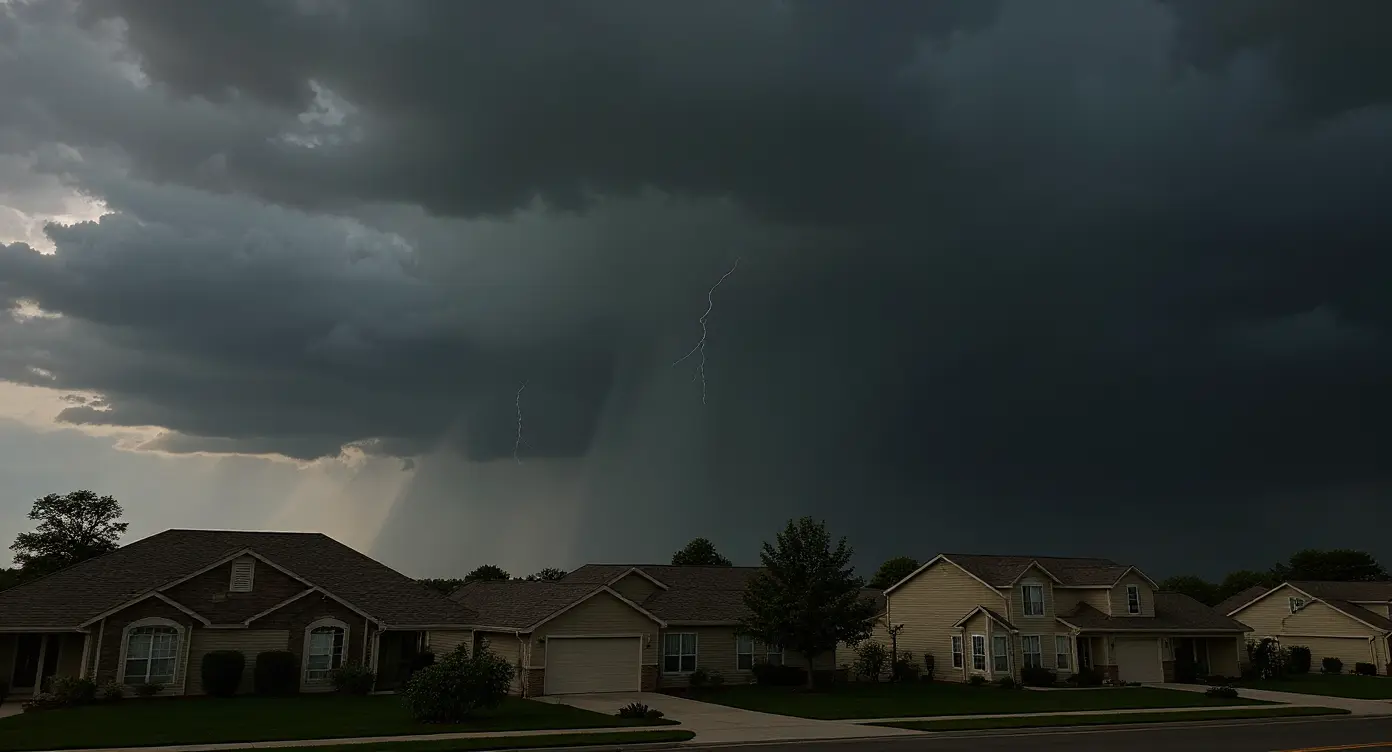
Storm Damage Roof Restoration in Lawrence, KS
Last night's hail didn't just dent your gutters — it compromised your roof's water resistance. We document every impact point, coordinate with your insurance company, and restore your roof before the next storm hits.
Why Is Lawrence, KS One of the Most Hail-Damaged Markets in the Country?
Douglas County sits in the central Kansas hail corridor — the I-70 belt from Topeka to Kansas City. This 60-mile stretch sees some of the highest hail frequency in the continental United States. Lawrence averages 3-5 significant hail events per year, with peak season running from late March through August. The 2023 season alone produced two events with golf ball-sized hail that damaged hundreds of roofs across Old West Lawrence, North Lawrence, and Alvamar.
Kansas storms combine hail, wind, and rain in rapid succession. A typical Douglas County severe thunderstorm starts with 60-80 mph straight-line winds that lift shingles and break sealant strips. Hail follows 10-20 minutes later, pounding granules off the now-vulnerable shingles. Then heavy rain floods through every gap the wind and hail created. Three types of damage in one 45-minute storm — and many homeowners don't realize the extent until a leak appears days later.
Storm chasers flood Lawrence after every major hail event. Within 48 hours of a significant storm, out-of-town crews from Texas, Oklahoma, and Colorado set up in hotel parking lots along South Iowa Street and start knocking doors. They offer "free" inspections, sign homeowners to inflated contracts, collect the insurance check, and install the cheapest materials they can source. By the time the first warranty issue surfaces, their phone number is disconnected and their Kansas contractor registration has expired.
Undetected hail damage degrades your roof's lifespan by 30-50%. Hail doesn't always puncture shingles on impact. Bruised shingle detection requires physically pressing on impact marks to feel for fractured fiberglass mat beneath the granule surface. A bruised shingle looks intact from 10 feet away but has lost its structural integrity. The next freeze-thaw cycle cracks it open, and the next rain event pushes water through.
Your insurance company expects storm damage documentation photography within a specific window. Kansas insurers use storm data — NOAA reports, National Weather Service records, and hail spotter networks — to verify that damage claims correlate with documented storm events. The longer you wait between the storm and your claim, the harder it becomes to prove the damage came from that specific event. Documenting the damage within 30-60 days of the storm is ideal.
Wind damage is often invisible from the ground. Wind-lifted shingle identification requires climbing the roof and inspecting the sealant strips on every exposed course. Shingles that lifted in a 70 mph gust and re-sealed in a different position look normal from your driveway but have broken waterproof bonds. The next wind event lifts them further. The next rain finds the gap.
What Does a Hail Impact Pattern Assessment Include?
We inspect every roof slope, not just the side facing the storm direction. Hail travels at angles depending on wind speed and direction during the storm. A storm moving southwest to northeast may leave the worst damage on north-facing and east-facing slopes. We walk every section of your roof, marking and photographing each hail impact, wind-lifted shingle, and damaged flashing point.
Impact marks are tested for bruising, not just granule loss. Surface granule displacement looks dramatic in photos, but the real damage is beneath — fractured fiberglass mat that weakens the shingle's ability to resist water penetration. We press-test impact marks to determine whether the shingle is bruised (soft or spongy) or merely scuffed. Bruised shingles warrant replacement. Scuffed shingles may still have functional life remaining.
Soft metals reveal the storm's hail size more accurately than shingles. We check aluminum ridge vent caps, HVAC line covers, gutters, downspouts, and window screens for denting patterns. A 1-inch diameter dent in aluminum corresponds to approximately quarter-sized hail. These soft metal damage points help establish the hail size in your documentation — important when your insurer questions whether the hail was large enough to damage your shingles.
Wind-lifted shingle identification follows a systematic approach. We check every shingle course on exposed slopes for lifted or broken sealant tabs. In high-wind zones — ridges, hip lines, and edges — we check for nail pull-through where the shingle nail tore through the fiberglass mat. Shingles with broken sealant strips will continue to lift in future wind events, even at lower speeds than the original storm.
Your damage report includes GPS-tagged photography, measurements, and a written scope. Every photo is geolocated to your property address. We note hail counts per test square (10x10 area), impact sizes, and affected square footage. This storm damage documentation photography matches the format Kansas insurance adjusters use in Xactimate — reducing back-and-forth during the claim process.
We also inspect non-roof damage that supports your claim. Siding, paint, window trim, AC units, wooden fences, and outdoor furniture all absorb hail impacts. Documenting this collateral damage strengthens your claim by establishing the severity of the storm event at your specific address — not just city-wide averages.
How Do We Handle the Insurance Claim Process for Storm Damage?
We handle Xactimate scope sheet preparation and adjuster meeting coordination so you don't have to. After our inspection, we prepare a scope of work in the same line-item format your insurance adjuster uses. This includes every roofing component affected — shingles, underlayment, ice and water shield, flashing, pipe boots, ridge vent, drip edge, starter strip — plus tear-off, haul-off, and disposal costs based on current regional pricing.
We meet your adjuster on the roof and walk the damage together. Insurance adjusters are often on your roof for 20-30 minutes. In that window, it's easy to miss damage on a back slope, behind a chimney, or in a recessed valley. We mark every damage point before the adjuster arrives and walk them through each one. This adjuster meeting coordination ensures your claim reflects the full scope of damage, not just what's visible from the ladder.
If the initial claim is underpaid, we file supplements with additional documentation. Adjusters sometimes miss items — especially interior line items like decking replacement, attic insulation damage, or code upgrade requirements (drip edge, ice and water shield) that didn't exist when the roof was originally installed. We file supplemental claims referencing specific Xactimate line item codes with supporting photos.
For detailed insurance claim guidance including ACV vs. RCV policies and Kansas filing deadlines, visit our insurance claim assistance page. That page covers the full Kansas insurance claim process — from initial filing through depreciation recovery — so you understand exactly what to expect from your policy.
How Does Storm Damage Restoration Work From Start to Finish?
We handle the entire process — inspection, documentation, insurance coordination, and restoration.
Free Storm Damage Inspection
We inspect your entire roof within 24-48 hours of your call. Every hail strike, wind-lifted shingle, and damaged flashing point is documented with GPS-tagged photos.
Damage Documentation Package
You receive a written report with photos, measurements, and a scope sheet formatted for your insurance company. This documentation meets the standards Kansas adjusters require.
Insurance Claim Coordination
We meet your adjuster on-site, walk the roof together, and ensure every damage point is included in the scope. If the initial assessment falls short, we file supplements with additional documentation.
Restoration & Final Inspection
Once your claim is approved, we schedule the restoration — typically completed in 1-3 days. You get a final walk-through, warranty paperwork, and before-and-after documentation.
How Do You Spot a Storm Chaser vs. a Local Roofer in Lawrence?
Storm Chaser Red Flags
- ✗ Out-of-state license plates and no local office address. They're working from a hotel room on South Iowa Street.
- ✗ Pressure to sign a contract before your insurance adjusts the claim. Legitimate contractors don't need your signature before you've talked to your insurer.
- ✗ Offers to "cover your deductible." This is insurance fraud in Kansas. Any contractor who offers this is breaking the law — and putting your policy at risk.
- ✗ No Kansas contractor registration or proof of insurance. Ask for both. A legitimate Kansas contractor carries general liability and workers' compensation.
- ✗ They disappear after the job. Their phone number changes, their website goes down, and their "warranty" is worthless paper.
What a Local Contractor Looks Like
- ✓ Local office address you can visit. We're at 2500 W 31st St, Lawrence — stop by anytime.
- ✓ Established before the storm. We've been in Lawrence since 2018 — not since last Tuesday's hailstorm.
- ✓ Encourages you to call your insurer first. We provide documentation to support your claim — we don't pressure you to sign before you understand your coverage.
- ✓ Verifiable Kansas contractor credentials. Licensed, insured, and registered with verifiable documentation.
- ✓ Still here for warranty work. When you call in 2029 about a shingle issue, we answer the same phone number: (785) 592-3791.
Storm Damage Restoration Across Douglas County
Based in Lawrence at 2500 W 31st St, we serve homeowners and businesses across Douglas County and surrounding communities.
Communities We Serve
Drive Times from Lawrence Office
- Eudora15 min
- Baldwin City20 min
- Lecompton15 min
- Kanwaka10 min
- Midland12 min
- Pleasant Grove18 min
- Sibleyville20 min
Storm Damage Questions Lawrence Homeowners Ask After Hail
- How do I know if my roof has hail damage after a storm in Lawrence?
- Hail damage on asphalt shingles shows up as dark circular impact marks where granules have been knocked off, exposing the black fiberglass mat underneath. From the ground, you may notice dents in gutters, downspouts, or metal flashing. Soft metals like aluminum fascia and window screens show dents more readily than shingles — if those are dented, your shingles likely took hits too. A professional hail impact pattern assessment identifies whether the damage is cosmetic or functionally compromising your roof's water resistance.
- Should I file an insurance claim for storm damage or pay out of pocket?
- The answer depends on your deductible amount versus the damage scope. If hail damaged your entire roof and the replacement cost is $12,000 with a $1,000 deductible, filing a claim is clearly worthwhile. If wind lifted three shingles and the repair cost is $400, paying out of pocket avoids adding a claim to your record. We inspect the damage first and give you a realistic scope estimate so you can make an informed decision before calling your insurer.
- How long do I have to file a hail damage claim in Kansas?
- Kansas insurance policies typically require you to report damage within one year of the event, though some policies have shorter windows. The critical detail is the Kansas claim filing deadline in your specific policy — check your declarations page or call your agent. We recommend filing within 60 days of the storm event. Waiting longer makes it harder to prove the damage came from a specific storm, and your insurer may argue that subsequent weather events contributed to deterioration.
- What is an Xactimate scope sheet and why does it matter?
- Xactimate is the software Kansas insurance adjusters use to estimate storm damage repair costs. An Xactimate scope sheet lists every line item — shingle squares, underlayment, ice and water shield, drip edge, flashing, pipe boots, ridge vent, labor, tear-off, haul-off, and disposal — with prices pulled from a regional database. When we provide documentation in the same Xactimate format your adjuster uses, it eliminates translation errors between our scope and their estimate. If items are missing from the adjuster's scope, we reference the line item codes to file a supplement.
- What's the difference between hail damage and normal roof wear?
- Hail damage creates random-pattern circular marks with sharp granule displacement. Normal wear shows as even granule loss across the shingle surface, edge curling, and cracking along stress lines. Bruised shingle detection involves pressing on the impact mark — hail-damaged shingles feel soft or spongy because the fiberglass mat is fractured beneath the granule surface. Your adjuster will test for this during the inspection. Blistering (raised bubbles in the shingle) is a manufacturing defect, not storm damage.
- Will you meet my insurance adjuster on the roof?
- Every storm damage claim we handle includes adjuster meeting coordination at no additional cost. We schedule the meeting, walk the roof alongside your adjuster, and point out every documented damage point. This matters because adjusters typically spend 20-30 minutes on a roof — easy to miss damage on a back slope or behind a chimney if no one directs their attention to it. Our presence ensures your claim scope reflects the full extent of the damage.
- How many hail storms does Lawrence, KS get per year?
- Douglas County averages 3-5 significant hail events per year, with the primary storm season running from March through August. Lawrence sits in the central Kansas hail corridor — the I-70 belt from Topeka through Kansas City sees some of the highest hail frequency in the nation. The 2023 and 2024 seasons each produced multiple events with golf ball-sized hail that damaged hundreds of roofs across Lawrence neighborhoods.