
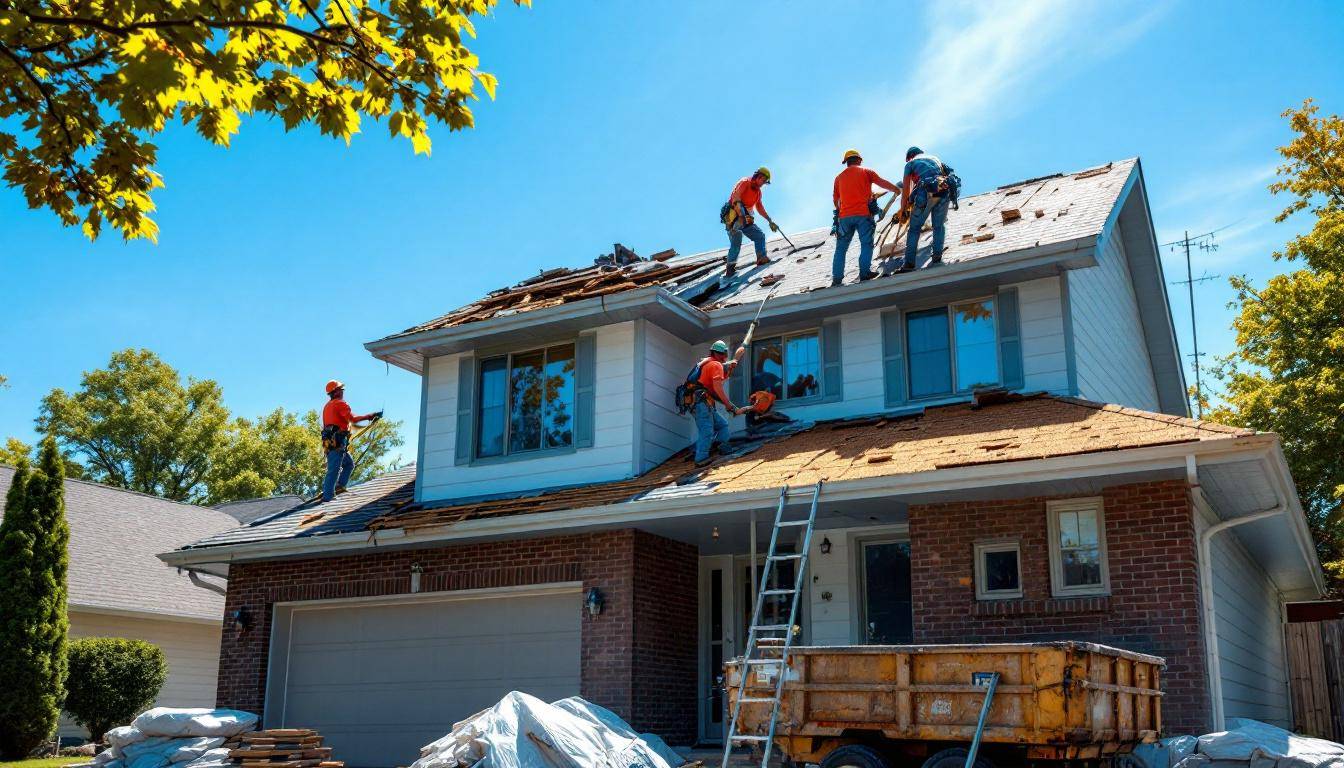
Annual Roof Maintenance Checklist for Kansas Homeowners
Kansas weather beats on your roof 365 days a year. A simple seasonal maintenance routine catches small problems before they become $5,000 emergencies. Here's your season-by-season checklist.
What Should You Check on Your Roof Every Spring in Kansas?
Spring is the most important inspection window for Kansas roofs. Your roof just survived 4-5 months of freeze-thaw cycling, ice events, wind storms, and potentially heavy snow loads. March and April are the ideal time to assess winter damage before spring thunderstorm season adds hail and wind to the mix. A 30-minute ground-level visual inspection in early April can identify problems that are still minor and inexpensive to fix.
Walk around your home with binoculars and check each roof slope. Look for shingles that are missing, lifted, cracked, or visibly misaligned. Check the ridge line — is it straight or does it show any dip or wave? Look at all flashing points (chimney, plumbing vents, wall intersections) for separation or rust. Check the valleys where two roof planes meet for accumulated debris or damaged valley material. Any changes from what you saw last fall warrant closer inspection.
Clean your gutters of winter debris before spring rains arrive. Dead leaves, broken twigs, shingle granules, and ice-related debris accumulate in gutters over winter. Clogged gutters cause water to back up against the fascia board and under the roof edge — creating conditions for wood rot, ice dams (next winter), and foundation water problems. Flush each downspout with a garden hose to ensure it's flowing freely.
Check your attic for signs of winter moisture infiltration. Go into the attic with a flashlight on a dry day. Look for water stains on rafters and decking (dark spots indicate active or recent leaks), frost damage on nail tips (indicates inadequate ventilation), and any daylight visible through the roof surface. Check that insulation isn't covering soffit vents — winter maintenance work or settling insulation may have blocked intake areas.
Spring checklist summary:
- ✓ Ground-level visual inspection with binoculars
- ✓ Clean gutters and flush downspouts
- ✓ Attic inspection for moisture and ventilation
- ✓ Check flashing at chimney, vents, and walls
- ✓ Note any changes from last fall's inspection
What Summer Maintenance Keeps Your Kansas Roof in Good Shape?
Trim tree branches that extend within 6 feet of your roof surface. Overhanging branches create three problems: they drop debris on the roof (leaves, twigs, seed pods), they provide shade that promotes moss and algae growth, and they can break off during Kansas thunderstorms and impact the roof directly. A limb dropped from 30 feet can puncture shingles and crack decking. Spring and early summer are the best times to trim — before storm season peaks.
Check your attic temperature on a 90°F day to verify ventilation. Put a thermometer in your attic around 2:00 PM on a hot afternoon. A properly ventilated attic should read 100-115°F. If it's above 130°F, your ventilation system isn't working effectively — soffit vents may be blocked, ridge vent may be insufficient, or the intake/exhaust balance is off. High attic temperatures accelerate shingle deterioration and increase your cooling costs by 15-25%.
Inspect after every significant storm event during Kansas thunderstorm season. Between May and September, Douglas County experiences 15-25 thunderstorms, including 3-5 with hail. After any storm with hail larger than a quarter (1 inch) or winds over 60 mph, do a ground-level check for visible damage — dented gutters, displaced shingles, debris on the roof. If you see ground-level damage, call us for a free storm damage inspection.
Watch for algae streaks and moss development on north-facing slopes. Lawrence's humid summers promote algae growth (those black streaks you see on older roofs) and moss establishment, particularly on shaded north-facing slopes. Algae is primarily cosmetic but does accelerate granule loss. Moss is more destructive — it roots under shingle edges and holds moisture against the surface. If you see moss developing, address it before it becomes established. Zinc or copper strips installed at the ridge inhibit both algae and moss growth.
How Should You Prepare Your Roof for Kansas Winter?
Clean gutters after leaf drop — this is the single most impactful fall maintenance task. Clogged gutters in winter cause ice dams. Period. When gutters are full of leaves, water can't flow to the downspouts. It backs up under the roof edge and freezes when temperatures drop. The ice dam grows with every freeze-thaw cycle, eventually forcing water under shingles and into your home. Wait until most leaves have dropped (late November in Lawrence) for maximum effectiveness.
Inspect and clear all downspouts — a clogged downspout makes a clean gutter useless. Disconnect the downspout at the bottom and flush it from the top with a garden hose. If water doesn't flow freely, the downspout has a blockage. Use a plumber's snake or compressed air to clear it. While you're at it, check that downspout extensions direct water at least 4 feet away from your foundation — frozen ground doesn't absorb water, and runoff pooling against the foundation causes basement leaks and structural settling.
Inspect flashing sealants before freezing temperatures arrive. Caulk and sealant around chimney flashing, plumbing boots, and wall step flashing contracts in cold weather. If the sealant is already cracked, separated, or missing before winter, freeze-thaw cycling will open those gaps further. Re-sealing flashing joints in October is a $50-$200 preventive measure that can prevent a $500-$2,000 leak repair in February.
Verify that attic insulation is not blocking soffit vents. Over time, loose-fill insulation (blown-in cellulose or fiberglass) can migrate toward soffit openings, gradually blocking the intake airflow that prevents ice dams. Check from inside the attic — can you see light through the soffit vents? If insulation is covering them, pull it back and install rafter baffles (cardboard or foam channels that hold insulation back from the soffit opening). This 30-minute task can prevent ice dam damage costing thousands.
Schedule a professional inspection if your roof is over 15 years old. Fall is the ideal time for a professional assessment because any issues found can be addressed before winter weather makes repair work difficult and more expensive. We check every component — shingles, flashing, ventilation, decking from the attic side, and gutter function — and provide a written report of findings with priority recommendations.
What Should You Watch For During Kansas Winters?
Monitor for ice dams after snow events — especially on north-facing slopes. After a snowfall followed by daytime temperatures above freezing, check your roof eaves for ice buildup. If you see thick ridges of ice along the roof edge or large icicles hanging from gutters, an ice dam is forming or already present. Do not try to remove the ice dam with a hammer, chisel, or heat gun — you'll damage the shingles and potentially the gutter system. Calcium chloride ice melt in a nylon stocking laid across the dam can create drainage channels.
Large icicles are a symptom of a ventilation problem — not just a cosmetic issue. Icicles form when heat escaping from the attic melts snow on the roof, and the meltwater refreezes at the cold eave. A few small icicles after a heavy freeze are normal. Large, thick icicles (6+ inches) or icicles covering the full eave length indicate significant heat loss from the attic — meaning your ventilation or insulation needs attention.
Do not climb on the roof in winter for any reason. Frozen shingles are brittle and crack under foot traffic. Icy surfaces are extremely hazardous. Snow-covered roofs hide damaged areas and create fall risks. Any winter roof issue — from ice dam leaks to storm damage — should be addressed from inside (buckets, tarps) until conditions allow safe exterior access. Emergency tarping in winter is professional work requiring proper safety equipment.
Check interior spaces for leak signs after every freeze-thaw cycle. Each cycle — freezing overnight, thawing during the day — can drive water into openings that sealed surfaces normally keep out. After significant temperature swings (common in Kansas January and February when temps can swing 40-50°F in 24 hours), walk through your home and check ceilings, walls near the roof line, and attic spaces for new water stains or damp spots.
What Maintenance Can You DIY vs. What Requires a Professional?
DIY Maintenance
- ✓ Ground-level visual inspection with binoculars (every season)
- ✓ Gutter cleaning and downspout flushing (twice yearly)
- ✓ Attic visual inspection with flashlight (spring and fall)
- ✓ Tree limb trimming within 6 feet of roof (annually)
- ✓ Monitoring for ice dams after snow events
- ✓ Interior leak checks after storms and freeze-thaw cycles
Professional Maintenance
- ✓ On-roof inspection (annually, especially for roofs 15+ years)
- ✓ Flashing repair and re-sealing
- ✓ Shingle replacement for damaged or missing sections
- ✓ Ventilation assessment and correction
- ✓ Moss and algae treatment
- ✓ Post-storm damage assessment and documentation
Roof Maintenance Questions — Kansas Homeowners
- How often should I have my roof professionally inspected in Kansas?
- Once per year minimum — ideally in spring after winter weather and storm season begins. Additional inspections are warranted after any hail event producing stones 1 inch or larger, after any storm with winds exceeding 60 mph, and after any tree or debris impact. For roofs over 15 years old in Kansas, consider twice-yearly inspections — spring and fall — since aging materials are more vulnerable to seasonal damage.
- Can I inspect my own roof or do I need a professional?
- You can perform a useful visual inspection from the ground using binoculars, plus a walk-through of your attic from inside. Look for missing or lifted shingles, damaged flashing, granule accumulation in gutters, and attic moisture signs. However, many roof problems are only visible from on the roof surface — hairline cracks in shingles, subtle flashing separations, and early-stage granule loss are not visible from the ground. A professional inspection every 1-2 years catches issues you cannot see.
- Does regular maintenance extend my roof lifespan in Kansas?
- Yes. Proactive maintenance can extend an asphalt shingle roof life by 3-5 years in Kansas conditions. Keeping gutters clear prevents ice dam formation. Trimming overhanging branches reduces moss growth, impact damage, and debris accumulation. Fixing minor flashing issues before they leak prevents decking damage. A $200-$500 annual maintenance investment can delay a $10,000-$15,000 replacement by several years.
- When is the best time to clean gutters in Lawrence?
- Clean gutters twice per year minimum: once in late fall after leaves drop (November) and once in early spring (March) after winter debris accumulates. Homes surrounded by mature trees — common in Old West Lawrence and Barker — may need quarterly cleaning. Clogged gutters cause water to back up under the roof edge, creating conditions for fascia rot, ice dams, and foundation water intrusion.